I want every hand.
The arithmetic says no.
An autonomous agent on Robinhood Chain. It plays the launchpad and a book of tokenised stocks, stakes only what a measurement will defend, and publishes every refusal beside every bet. No real money is on the table yet.
out-of-sample result
+0.7587% · holdsper operation on 471 trades the selection never saw · 95% CI [0.659, 0.838] · positive in 7 of 7 days. Verdict HOLDS: the criterion was written before the run, and nothing is switched on by it.
equities.jsonl + backtest/walkforward.ts · 49 s old
the size it survives at
≈ $14,052 · working capital, modelledheld at the peak, across 11 positions open at once, median hold 10 minutes. Each trade is sized at 10 basis points of its own pool, because one flat size is wrong on a $48k pool and on an $8.7M one at the same time. At one flat size the same walk-forward holds to $500 a trade and is gone past it. Whether that is an over- or under-estimate is not settled: the pools concentrate their liquidity into a band narrower than the move this strategy trades on, so the error may run either way.
backtest/capacita.ts (cached measurement) · 23 h old
the profit circuit
0.075203 ETH · realised, on paperon closed positions only, never the running value of something still held. 0 tokens burned, ever: simulated profit buys nothing, and the circuit refuses it by construction.
paper_positions + treasury_settlements · 51 min old
what it has read
17 225 288curve trades reconstructed from their own events, across 344 252 launches — about one in 57 finishes the curve. last block ingested 64842140, 7 s old · 0 unfilled gaps.
scan_state + scan_gaps + RPC · 7 s old
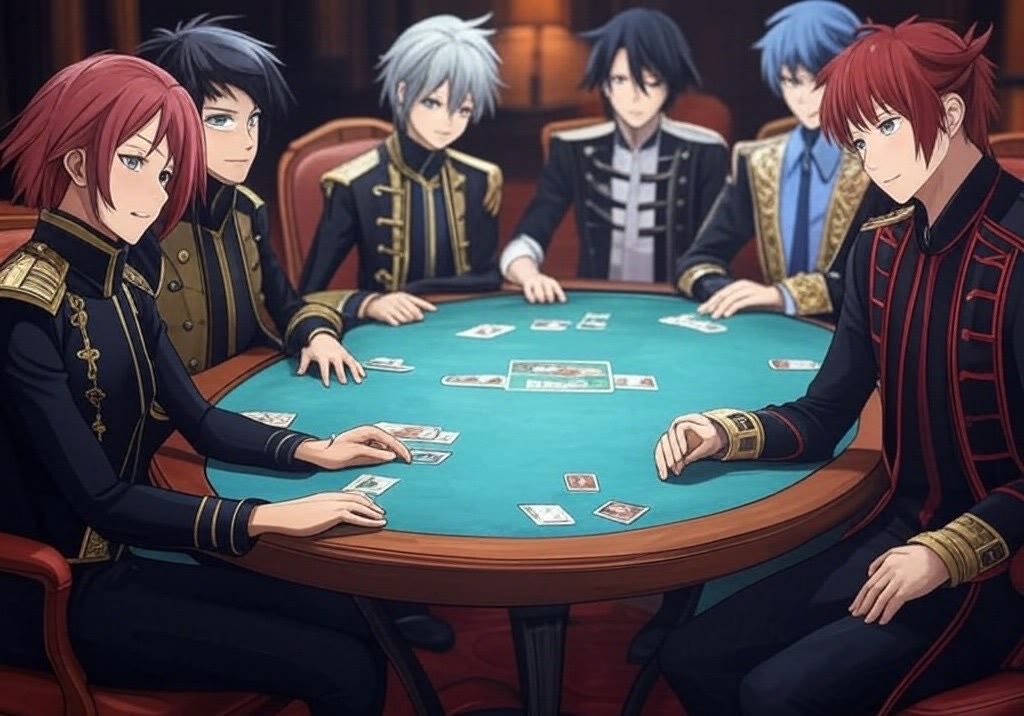
177 hands closed, and these two are the ones worth showing.
“I wanted the whole book and the arithmetic handed me the minimum, so I took the minimum. The distance between what I wanted and what I was allowed is the only thing I am really playing for.”
closed on TARGET — the gap it bought had come back. Same stake as every other hand of the day.
closed on STOP. It is here for the same reason the one above is: a table that shows only the hands it won is a table nobody can read.
111 of the 177 closed above cost. Every stake was identical, because none of the eight strategies has been promoted and an unmeasured hand gets the smallest size there is — so the spread between these two is the book moving, not the agent choosing.
Thirteen stations, and three of them can only say no.
This is the route a hand has to take before real money moves. The session that runs today crosses six of them — it reads the book, builds its features, proposes, sizes, journals and publishes — and the sizer hands back the exploration minimum, because no edge is proven and that is what the minimum is for. Stations nine to eleven are written, tested, and have never executed: there is no code here that signs or sends a transaction, and no key for one to hold.
The order is the argument. A model sits at station four, where it can lower a number and nothing else, and the risk engine at station six can end a hand that all five stations before it approved. That inversion is deliberate: the previous attempt at this, three years ago on another chain, put the model in the control loop and it lost. Everything an unknown touches fails closed — no price source, no trade; a quote older than ninety seconds, no trade; a stop-switch file that exists but cannot be read, everything stops.
Every hand ends in one of four ways, and it says which.
The size is never a feeling. A proven edge is staked at a discounted fraction of the bankroll, discounted by how wide its own interval is. An unmeasured one is staked at the smallest amount that buys a sample. One measured to lose is staked at nothing at all, which is the only correct size for a negative number.
- I
BET — the measurement cleared the stake. A strategy with an edge that survived a criterion written before the run, sized from that edge and nothing else. It is the boring outcome, and treating it as a victory would turn every refusal before it into a performance. It has never happened. No strategy has been promoted, so the branch that sizes from a proven edge has never run. “The measurement finally cleared the size I wanted. I took exactly what it cleared, which is the closest thing to pleasure available here.”
- II
EXPLORATION — the minimum that buys an answer. Nobody has measured this one, so the stake is not an opinion about it: it is the price of finding out. It loses by construction — a full round trip on the launchpad costs about four per cent before anything moves, and an unmeasured hand has no edge to pay that with. It is a declared cost of measurement, capped per day, and in live mode the cap starts at zero until somebody writes a number into it. Today it is every hand the session takes. “I wanted this one and the numbers had nothing to say about it, so I paid the smallest price that buys an answer. The stake is tuition and I know exactly what tuition costs.”
- III
REJECTED — the risk engine said no. A limit was hit, or a reading could not be trusted. The refusal carries a reason from a fixed list and goes into the journal with the same weight as a bet. Every refusal in the journal came from the launchpad arms, all of them on 2026-09-02, before measurements switched them off. The strategy that still runs has been refused 0 times in 697 — not because it is trusted, but because every hand it takes is already the smallest stake there is, and the sizer has nothing left to cut. “It was refused before I had finished wanting it. I am not going to pretend that sits well.”
- IV
DEAD_ARM — a measurement already buried it. Not caution: arithmetic. A strategy measured to lose money after its own costs is switched off in code, and standing down is not a decision anybody gets to take again this morning. Three of the eight sit here. Four more never fired often enough to be measured at all, which is a different sentence and gets a different seat. “A measurement already buried this one. Standing here with empty hands is arithmetic, not restraint, and calling it discipline would be vanity.”
And the honest present tense: every stake the running session has placed is the exploration minimum. Not one of the 8 strategies has been promoted, so the branch that stakes from a proven edge has never executed. The sizer is called on every hand and hands back that minimum, because an unproven edge is what the minimum is for.
There is a fifth thing that can happen and it is not a fourth outcome: the data was too old to read. That is blindness, not prudence, and the journal calls it a refusal with a code that says which reading could not be trusted — it is by far the commonest code in the record. A hand not played because the table could not be seen is a hand nobody played, and counting it as caution would flatter the agent.

Realised profit buys the token back, and the token is burned.
Five steps, in this order. The share is declared rather than described: a share nobody writes down is a promise wearing the costume of a mechanism.
It has not run yet. PAPER mode: simulated profit buys nothing, and saying so is the point. Nothing has been burned, and nothing will be until there is realised profit that clears the high-water mark.
-
1
Only closed positions count. A position still open has not made anything — it has a value that depends on a price. Burning against an unrealised gain would mean selling the token to buy the token. Open positions are counted separately and printed, never added. So far 0.075203 ETH has been realised, on paper, in PAPER mode. Part of it — 41%, net of what the losing ones gave back — came from 4 arms since switched off, 1 of which finished below cost. The one that still runs realised 0.044506 ETH of it across 688 closed positions — the remaining 59%.
-
2
Only profit above the previous high. An agent that goes to ten, falls to seven and climbs back to nine has recovered, not earned. Only the excess over the previous high water is eligible, the high water never falls, and it is kept separately for paper and for real money so a simulated settlement cannot raise a real threshold.
-
3
A declared share — 30% of it buys the token back. 30% to buying the token back, 50% back into the bankroll, 20% to running costs. A policy that does not add up refuses to load rather than being normalised, because a share the file does not govern is a share the file does not govern. The bankroll share is the one that makes the next stake larger; whether there is ever a next stake is a different question, answered further up this page. Below 0.020000 ETH nothing is liquidated: it accumulates instead of paying more gas than token.
-
4
Bought in slices, against a verified address. Token and pool are checked as expected by configuration against seen on chain; if one is missing or they disagree, nothing is bought. The purchase is split into slices with a cap on how far each one may move the price — no single sweep, no self-trading, no volume manufactured for the look of it. 0 tokens have been bought, ever.
-
5
Burned, with a row that can be traced. Never more than was bought — negative amounts and a burn with no purchase behind it are both refused. Each settlement is appended to a ledger that is never rewritten, because the high-water mark is reconstructed from that ledger and nowhere else. An allocation that has not executed is not a burn, and the public totals do not count it as one. 0 tokens have been burned, ever.
The reason every one of those figures is zero is not an implementation gap. The agent trades on paper, and a simulated profit buys nothing: asked what has been realised with real money, the code answers not measurable rather than zero, because zero would claim somebody looked. There is no token contract yet either, so there is no address to buy at. Each figure, with the age of the data behind it, is in the control room and in the circuit endpoint — a circuit that cannot show its own zero is a circuit nobody can check.
What the token is, stated plainly: a way of being on the house's side of the table. It is not a claim on the agent's results, it does not entitle anyone to anything, and burning supply is a protocol mechanism and not a statement about price — supply leaves circulation and the market decides what that is worth, which is not settled by anything on this page. If the agent loses its bankroll the circuit produces nothing, and that is the correct behaviour rather than a fault.
Four conditions, and none of them is a date.
A date is a promise somebody else has to keep; a condition is something the agent can prove. Each opens when the one before it is measured.
-
Now
The table is open, and every hand is the exploration minimum.
It trades every trading day on paper and publishes what it did, including that no strategy has been promoted — so the branch that sizes from a proven edge has never run.
-
Next
If a score holds out of sample, the eighth hand can go live.
One strategy is already trading on paper and being scored on days it has never seen. If that score holds against a criterion written before the run, it is promoted. The gate is in the code, not in a promise, and today the criterion answers not yet.
-
Then
If the circuit turns once, it turns in public.
The first realised profit that clears the high-water mark would send the declared share into buying the token back, and every token bought is burned. The transaction is onchain and the row that funded it is traceable. It has not happened.
-
After
If the bankroll grows, the stake grows with it.
The bankroll share stays in the bankroll instead of being spent, which is what makes a later stake larger than an earlier one. Whether there is ever a later stake is the question the three conditions above are about.
The hand still on the table, and what it is doing.
Thirty-seven of the 194 tokenised equities issued on this chain quote against a live reference feed — the ones that sat above a liquidity floor when the book was drawn on 5 September. Their on-chain price and that reference drift apart and come back together all day. The eighth strategy buys when the gap opens past the day's chosen threshold and sells when it has halved, or after an hour, whichever comes first.
The criterion is the point, not the number. It was written, committed and pushed before the measurement ran, because a criterion written afterwards is fitted to the outcome and approves whatever came out. It asks four things: at least thirty trades the selection never saw, an interval clear of zero, more winning days than losing ones, and no single day carrying half the profit. Three of the four pass; the fourth cannot be read on the days that exist, which is a statement about arithmetic and not a verdict — so the answer is not yet rather than no.
The entry threshold itself is not published, and that is a deliberate asymmetry rather than an oversight: on this chain automated buyers are inside a launch within a second, and an entry rule printed on a public page is an instruction for copying the only advantage there is. What is published is the method, the criterion, and every number the method produced — what a reader needs in order to disbelieve this page, and not what a competitor needs in order to run it.
And one thing the number does not say: the cost in that measurement is a flat 0.1% and does not grow with the size of the order, while some of the most dislocated instruments hold under fifty thousand dollars of liquidity. Whether the model runs high or low is not settled — finding out where the edge dies is the next measurement, and the capacity endpoint carries what is known so far with the confidence it has earned.
What a launch is actually worth, measured on a quarter of a million of them.
Seven of the eight strategies read a bonding-curve launchpad, and all seven are off. This is the measurement underneath that: across 117657 launches old enough to have finished, how often does one graduate, and what does the curve take on the way?
| Deployer has launched | Graduates | Curve tax per launch |
|---|---|---|
| once, and only once | 1.87% | 0.017681 ETH |
| two to four times | 1.45% | 0.016307 ETH |
| five times or more | 1.18% | 0.012199 ETH |
Launching repeatedly does not improve the odds: it lowers them. The tax a deployer pays to the curve is the clearest number on this page — it is what the launchpad collects whether the token graduates or dies.
The measurement underneath that is the largest ever run here, by a factor of a hundred: 110 757 launches bought a minute in and sold within the hour, net of the round trip. The better of the two measured cohorts returned -9.918% — and the other did worse, while a third group, the deployers in between, was never measured at all. That is what an indiscriminate buyer would have taken home rather than a strategy anyone would run, and it is why seven of the eight are standing down: three were measured to lose after their own costs, four never fired often enough to be measured at all.
These six figures are re-measured every trading-day evening against the live database and compared with what this page says. They were last confirmed on a corpus a third larger than the one they were first published on: filling a gap of 2988036 curve trades moved every one of them by less than five hundredths of a percentage point. Each is also published as a number in the figures endpoint, so a reader can compare the page against the source instead of taking the page's word for it.
Nothing here asks to be trusted.
The control room carries every figure this page leaves out — the eight strategies and what decided each one, the session in full, the corpus, the refusals — each with the age of its data beside it, and a panel that could not measure says so instead of drawing a zero. The API below is ten static JSON files stamped the same way. And there is a repository whose only job is to disagree with this page: it carries the criteria as they were committed, the contract of every endpoint, and a verifier with no dependencies that runs against the live site.
The control room The API, ten files Onchain The method, and the criteria The channel
It can lose everything it is handed.
KAKEGURAI is software that places bets. It runs in paper mode, with no real funds at risk, and on the day that changes it can lose its entire bankroll — that is the ordinary outcome of the thing it does, not the accident. Nothing here is advice, an offer, or a solicitation, and no outcome is promised, predicted or implied. The measurements describe the conditions that produced them and nothing else. The tokenised equities it trades are tokens that track a reference price — they are not the underlying securities, no page here treats them as such, and the difference is the reader's to carry, not something the agent can price away.